An extended split-rail fence has been installed along Norn Trail to protect a rare and fragile wetland ecosystem (Norn Pond). The Saanich Parks Natural Areas crew made this work possible by carrying 50 fence posts from the Churchill/Irvine crossing to the Norn Trail Pond last week—no small feat!
After advocating for this extended fencing for some time now, we deeply appreciate Parks’ hard work and collaboration to ensure this measure is taken to help restore the degradation of this area by people and dogs unaware of its fragility.
The fence will help remind users that PKOLS (Mount Douglas Park) contains rare, at-risk ecological systems, including some of the most extensive remaining Camas and Garry Oak meadows in Saanich, which are incredibly fragile. Every ecosystem in the park has been provincially and globally identified as endangered.
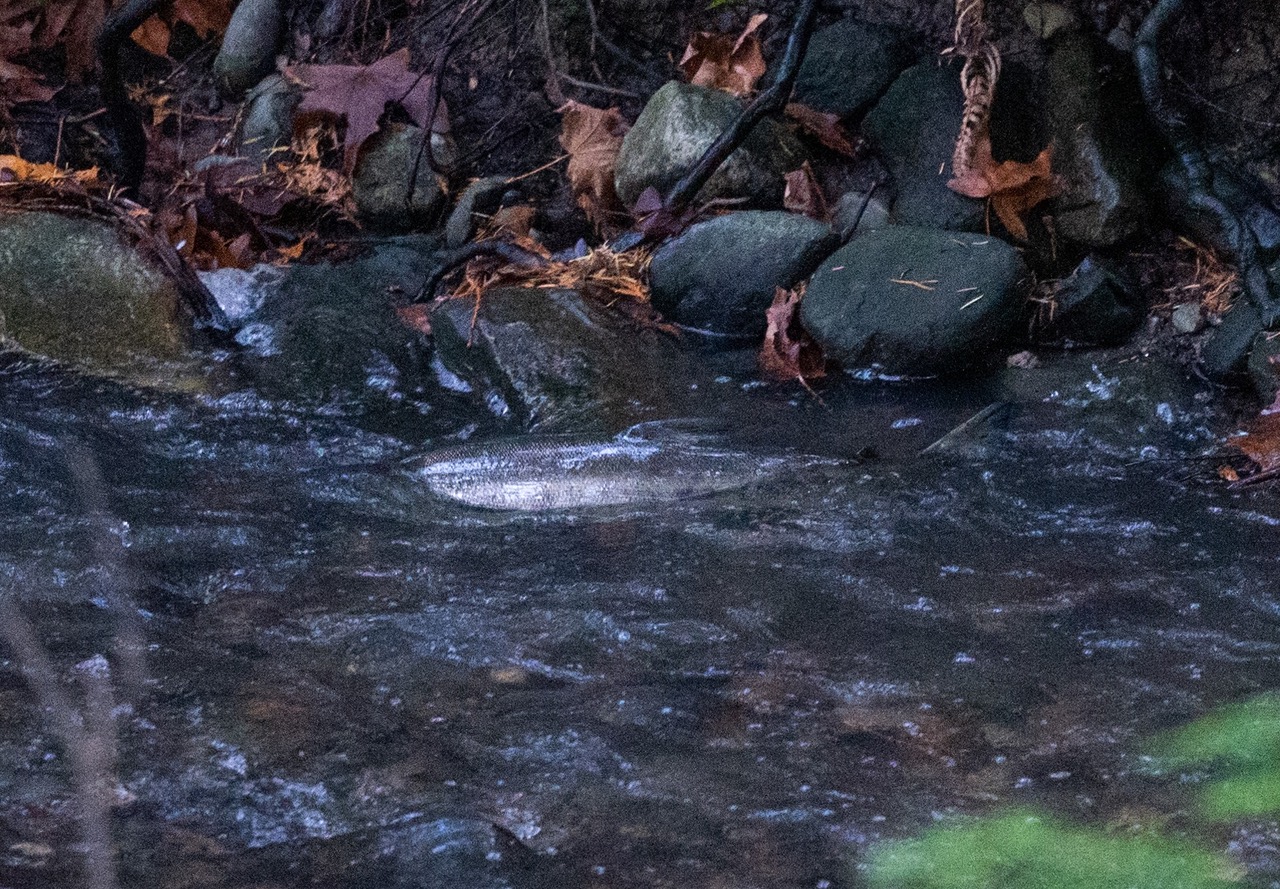
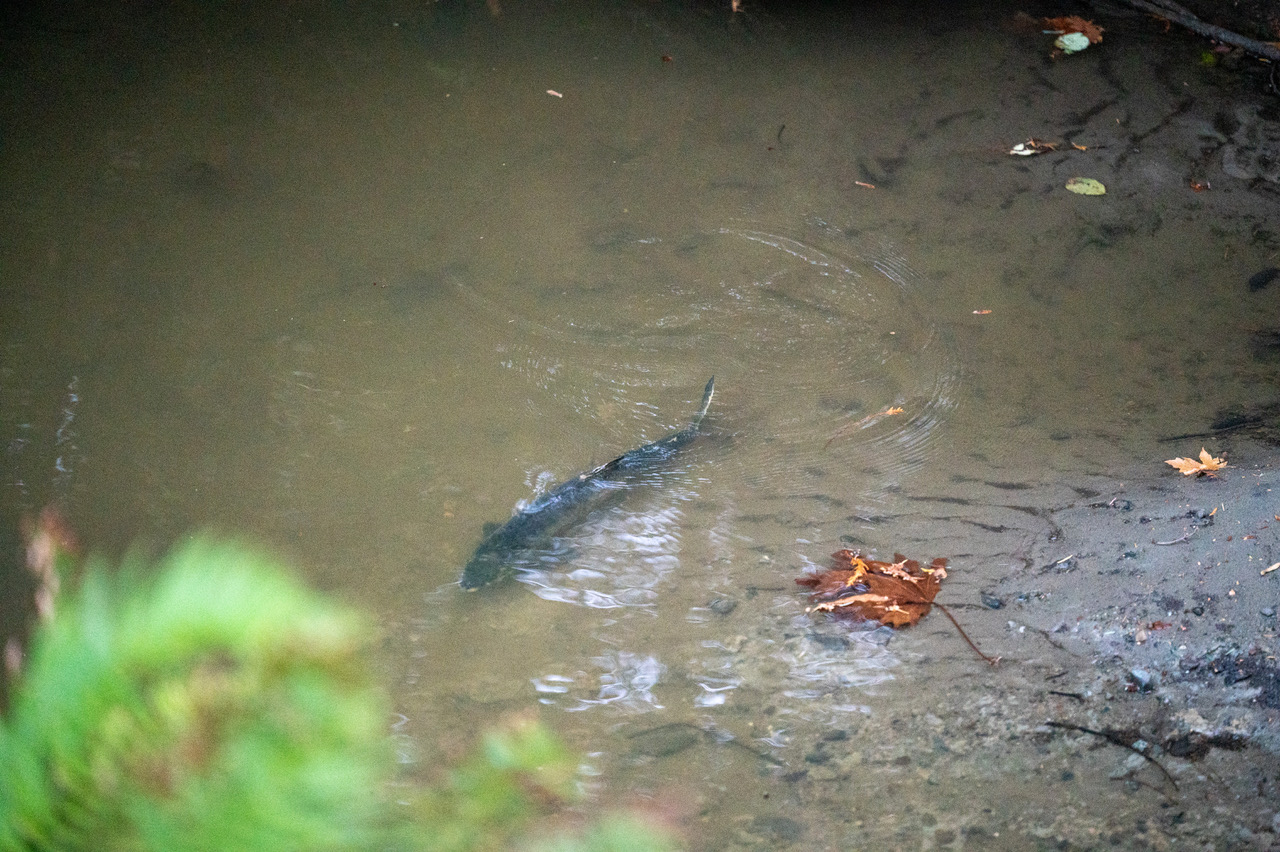
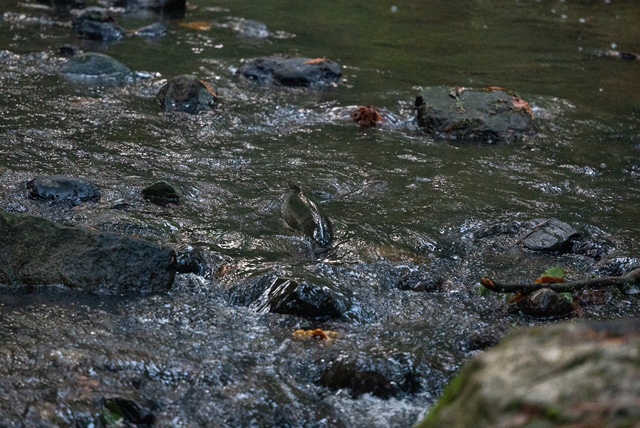
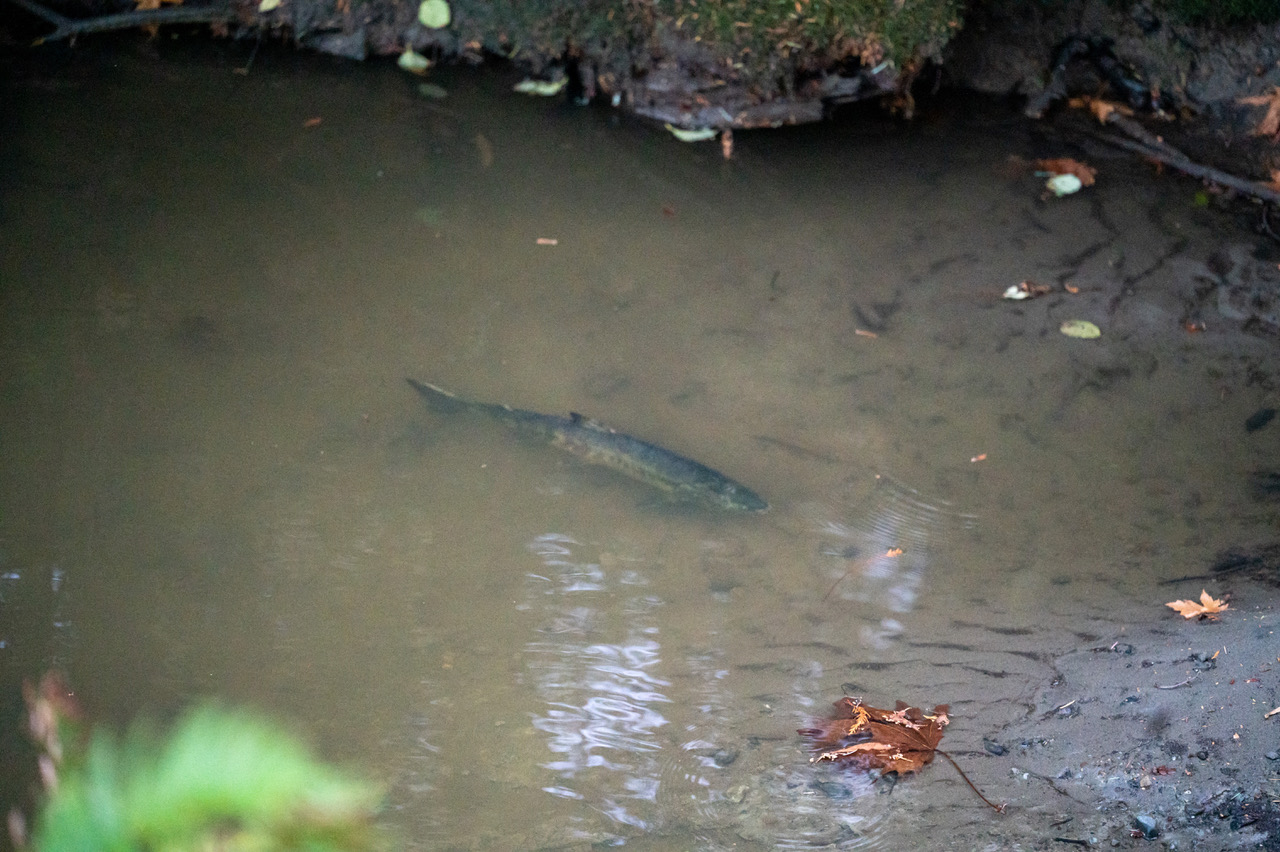
This year, there was a significant return of salmon in Douglas Creek due to the extensive restoration. That does not mean there are no ongoing challenges to safeguarding the habitat. Despite the signage and fencing designating the creek as a federally designated fish-bearing stream, there have been disruptions from humans and dogs disturbing the spawning fish. It does seem to indicate that more ongoing community education and protection are needed to sustain the delicate salmon life cycle in the creek.
The District of Saanich has released a statement and a report on how it will mitigate the erosion on the Cordova Bay Shoreline. It outlines how it has attempted to address the erosion in the past and the current plan, given that previous attempts have failed to stop it.
The plan includes a wattle fencing system and live local plants. They feel the addition of the vegetation will improve with time and hopefully stabilize the slope. The wattle fencing should protect the deeper soils of the cliff from water erosion.
Saanich Council approved the PKOLS communication tower to be located at the summit in the vicinity of the existing tower that it will be replacing. This is a win-win: Saanich gets their tower, and the Park is saved. This summit location completely hides the tower as one approaches Churchill Drive, and it is obscured by trees from the summit parking lot and also on the lower sections of the summit trail.
The tower will be installed using a crane based in the summit parking lot. There will also be a new trail with stairs constructed from the parking lot to the summit, improving the safety of the existing route. All installation costs related to this new tower installation will be paid from prior and possibly future tower rental income, not tax dollars. A portion of the monies from the lease are dedicated to improving and preserving the park for future generations.
The current tower will be removed by crane after the new tower is installed and fully operational.
Tower proponents are lobbying for a much bigger tower and want to put it at the existing Mount Douglas parking lot. Darrell Wick Letter of May 27, 2024 in Time Colonist
A friend told me the best way to get your partner’s approval to purchase a new Rolls-Royce. Don’t ask if we can purchase one; instead, ask, “What colour would you like for our new Rolls-Royce?”
This is the tactic being used for the possible new PKOLS-Mount Douglas tower. Don’t ask if we should purchase the biggest tower in all of Saanich, instead ask “Where would you like to install it?” More than a year ago, when it was determined the existing tower needed to be replaced because of safety regulations, commercial users of the tower, along with external engineering consultants, assembled ideas for a replacement. Putting all these wishes together, the totality of new additions and features added up to a lot of weight and wind loading, requiring a substantially bigger tower, a true Rolls-Royce of towers.
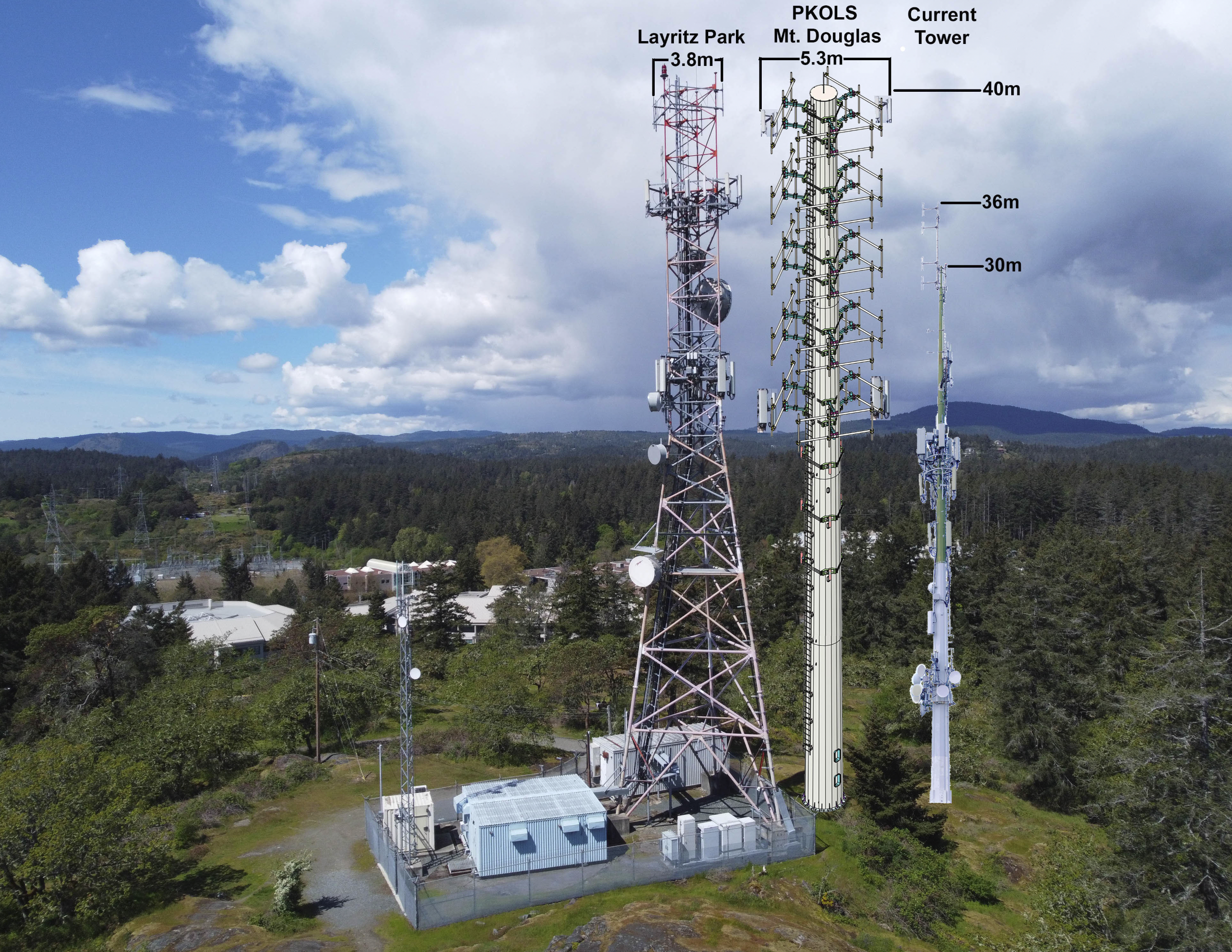
The proposed superstructure of this proposed tower surpasses by 40 per cent the current biggest tower in Saanich, the Layritz tower. This new tower will take on the dubious title of the biggest radio tower in Saanich.
Next were potential tower installation consultants who didn’t like the thought of having to walk up to the summit where the existing tower is located; it would be much more convenient to simply locate the tower in the parking lot next to their trucks. And they justified this decision with unsupported claims about environmental damage and expense: that a summit location would require a temporary road to the summit and that a crane would have to be barged from the mainland.
Even though the parking lot location is lower than the existing tower summit location, they wanted antennas mounted at the tower top to be the same elevation above sea level as the existing tower. To compensate for the 10-metre lower elevation of the parking lot, 10 metres was added to the height of the tower, changing it from a 30-metre to a 40-metre tower. This de facto 40-metre height became the new replacement height, independent of final location. Further, adding this one bottom 10-metre section (actually 11.7 metres) increases the tower weight by 58 per cent. Now we have a tower that is 58 per cent heavier, 33 per cent taller and 300 per cent wider with antennas. This is not a replacement, it is an entirely new concept far exceeding earlier council guidelines for this natural park setting.
So what do the proponents do? They don’t ask approval for this new concept, they simply ask council “Where would you like to locate the new tower?” This tower serves multiple commercial cell phone companies, along with some government and emergency services. Most of the new, expanded, tower size and antennas are for the cellular services. In the 33-year life of the existing tower, cell technology has progressed through 3G, 4G and now 5G cell service, with increasingly smaller cells served by building mounted antennas throughout the city.
Note that two-thirds of the 5G radio bands are not suitable for this mountain top location, but instead 5G requires more small, local “cells” closer to the phone user. Does this rapidly advancing technology match the 50-year expected future life of this tower? Is anyone going to sign a 50-year cellular service contract? The commercial users’ and external engineering consultants’ mandate focused on the tower, not the natural park, which must be given priority consideration. It’s quite feasible to locate the 40-metre tower at the summit near the existing tower, but a 30-metre tower, being much lighter, would be easier.
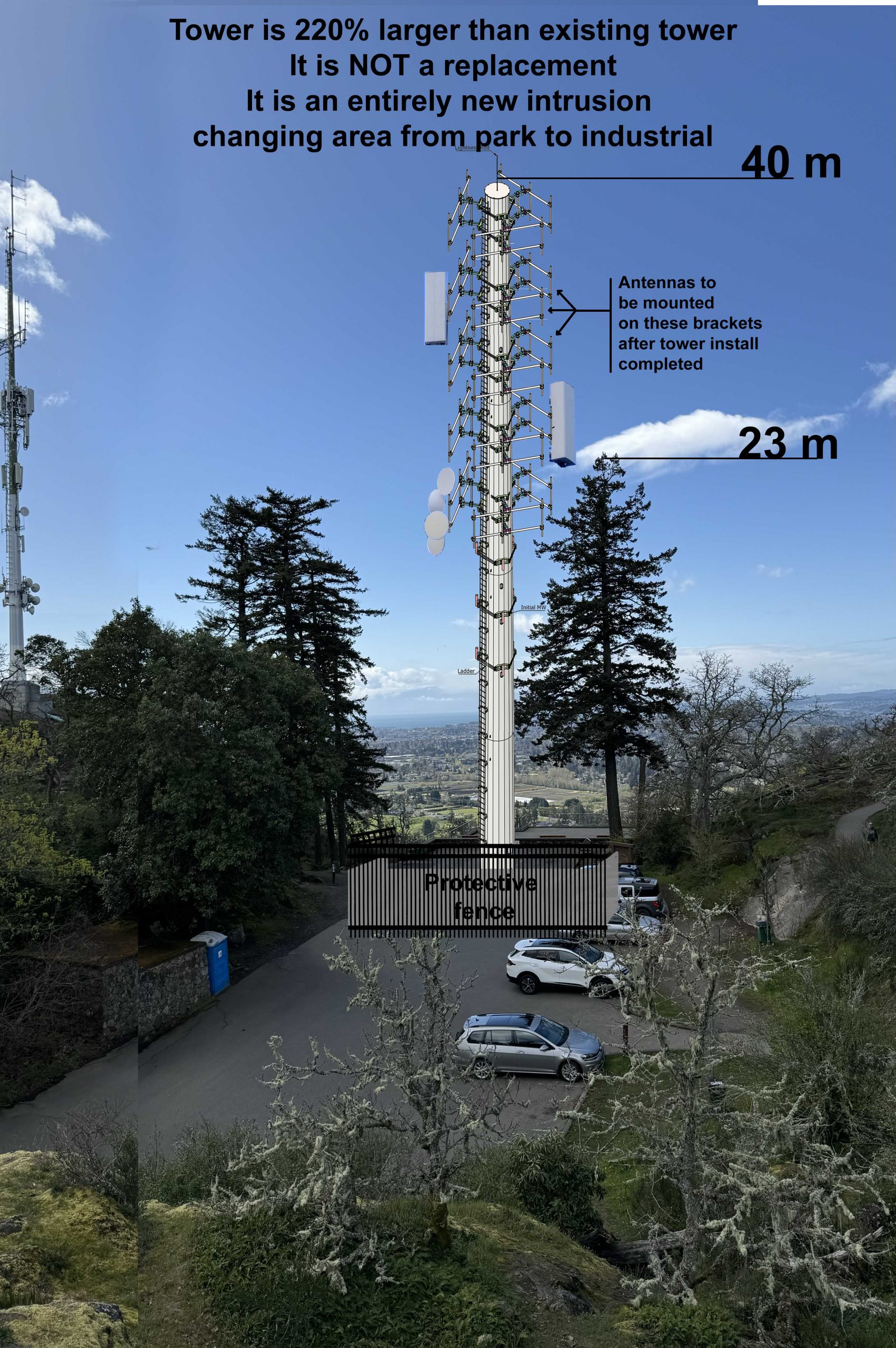
The parking lot location negatives are clear in these renditions. It dominates the natural setting, changing it from park to industrial zone, destroys the iconic Churchill Drive view, limits access to the viewing deck, eliminates almost half the parking, especially the three south facing view spots. It will be a graffiti magnet. It would be the summit focal point and dominate the landscape from surrounding neighbourhoods. The summit location near the existing tower is hidden by trees, preserves positive attributes of the parking meeting area and viewing deck, has direct crane access without tree damage, with overall zero environmental damage.
All that is needed is a new improved safe trail to the summit. The PKOLS-Mount Douglas Conservancy supports the summit location near the existing tower for any new tower. The conservancy strongly opposes any other location, especially the parking lot. The PKOLS-Mount Douglas Conservancy has always supported a reasonable, necessary replacement tower; a true replacement tower, not this gratuitous super-sized tower.
The existing tower is shown on the left, and the new tower’s proposed location is on the right. It is much larger because the parking lot is lower than the rock where the current tower stands. This means a giant tower and a more extensive base. Also, because it will be in the parking lot, it will be protected against accidental car collisions. This will likely mean a loss of at least half the parking stalls. The Conservancy sees no reason the tower could not go beside the existing tower; given that the current tower was installed by crane, so can the new tower. In addition, the old tower will have to be removed by the same crane.
Please join us for our annual salmon carcass transplant. Next Saturday, 16 March 2024, at 10:00 am at the Outdoor classroom / Douglas Creek Bridge.
The Howard English Hatchery at Goldstream has previously provided us with chum carcasses. This year, they will be bringing Coho salmon. The presentations will explain the switch. The event proceeds rain or shine (the salmon don’t care!). Also, with the warmer weather, the carcasses should be nice and slimy, so leave that lovely new winter coat at home!
This is a combination of educational and fun events with environmental benefits. It’s a family event, and children are most welcome, but for safety reasons, each child must be accompanied/supervised by a responsible parent or guardian.
The current version of the National Parks Act provides the most robust language to date, stating that “maintenance or restoration of ecological integrity, through the protection of natural resources and natural processes, shall be the first priority . . . when considering all aspects of the management of parks.”
These National Parks and Reserves are about preserving our regional ecosystems. Most of these parks are not easily accessible, and many are difficult to access. PKOLS – Mount Douglas, a much more accessible park, is an excellent example of beginning to apply these principles. Saanich has the opportunity to preserve a park with a more diverse ecologically threatened system than the National Reserve on Sydney Island.
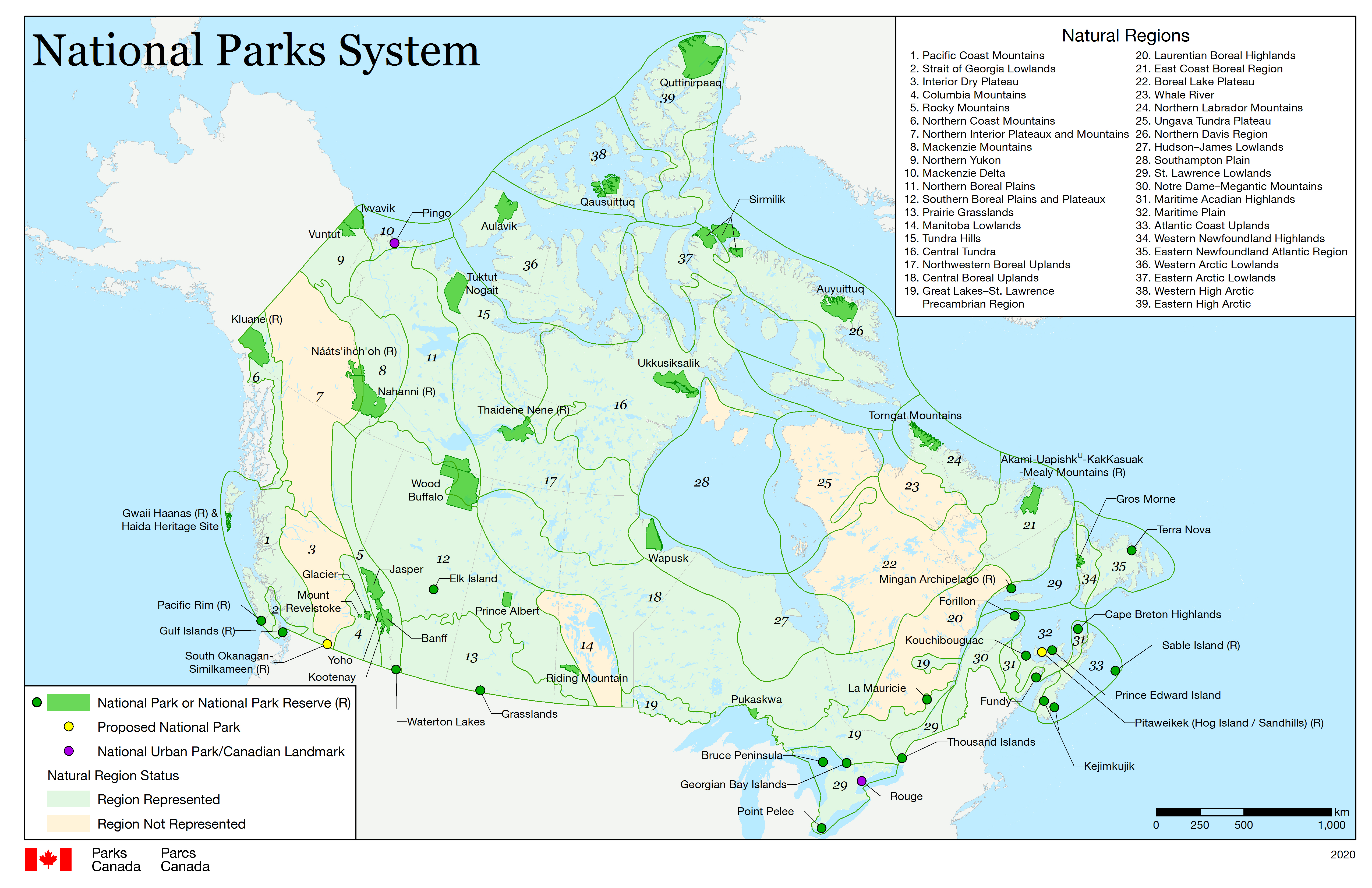
One of the concepts was to look at the country’s ecological diversity and ensure that each ecosystem had an area of national parks that preserved its uniqueness for future generations.
The map below shows the 39 distinct natural regions of the country and the parks that have now been set aside in these areas. We are in Natural Region 2, “Strait of Georgia Lowlands” in which PKOLS-Mount Douglas is found. PKOLS-Mount Douglas is likely to better represent the unique ecosystems of this region.
Four months ago, Aquavalid began an experimental trial to monitor metal concentrations in the water. This week it was removed as if it had never been there. The following are the summary reports, detailed data spreadsheet and the original proposal. The good news is there are no heavy metals present in the waters of Douglas Creek. Since they had been performing spectral analysis, the oil spill in the creek was not detected.
PKOLS - Mount Douglas lies within the traditional territories of the W̱SÁNEĆ peoples, represented by the W̱JOȽEȽP, BOḰEĆEN, SȾÁUTW̱, W̱SIḴEM and MÁLEXEȽ Nations; as well as the the lək ̓wəŋən peoples, represented by the Songhees and Esquimalt Nations. The W̱SÁNEĆ and lək ̓wəŋən peoples have been here since time immemorial, and their relationship with the land and water is long and rich.