-
-
- There are no upcoming events.
-
-
Latest Posts
- Park/Trail Etiquette
- Tower Installation
- Saanich Proposed Leash Opional Area
- Salmon Carcass Transplant 2026
- Newsletter Winter 2025
- Canine and Human Damage, in PKOLS-Mount Douglas Park
- Newsletter Summer 2025
- Bear Sighting Caution!
- Wild Salmon Day
- What Responsible Dog Owners Know
- Rogue Trails Causing Extinctions in Park
- A Great Salmon Carcass Transplant 2025!
- Salmon Carcass Transplant Jan 18th, 2025
- Year in Review
- H5N1 Bird Feeding Warning
- Protecting Norn Pond
- Newsletter, 2024 Fall/Winter
- Salmon Run in Douglas Creek, 2024
- Cordova Bay Road Stabilization
- Replacement Tower Location Decided
-
-
PKOLS - Mount Douglas lies within the traditional territories of the W̱SÁNEĆ peoples, represented by the W̱JOȽEȽP, BOḰEĆEN, SȾÁUTW̱, W̱SIḴEM and MÁLEXEȽ Nations; as well as the the lək ̓wəŋən peoples, represented by the Songhees and Esquimalt Nations. The W̱SÁNEĆ and lək ̓wəŋən peoples have been here since time immemorial, and their relationship with the land and water is long and rich.
-
Endangered Coastal Douglas-fir
PKOLS-Mount Douglas is Saanich’s largest protected Coastal Douglas-fir forest. Our nature preserve is in a narrow climatic region with a Mediterranean-like climate that allows these trees to grow; unfortunately, through many factors, these forests in this zone are mostly unprotected and diminishing quickly. We are fortunate to have these forests in under the protection of the Charter, so we can pass down this preserve to our children. We are thankful that the Saanich Environmental Official Community Plan (OCP), calls for the protection of air, land, and water quality and the biodiversity of existing natural areas and ecosystems. This plan further states, “While use of the parks will undoubtedly increase as the region grows, the rare and valuable natural resources within the park natural areas must be protected.”
The following article in the Rain Coast Conservation Foundation talks about how, for both Washington State and BC, these critical forests contain a “profound amount of micro-habitat diversity in this area.”
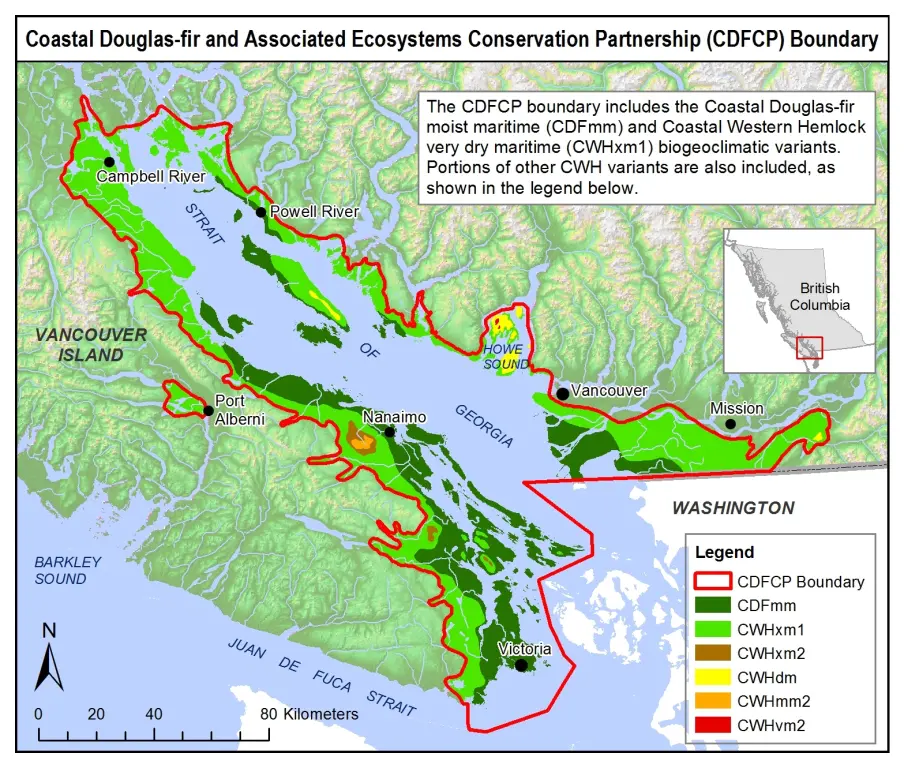
Why is the CDFCP Region at Risk?
“The CDFCP Region is at risk of losing many of the species, relationships, and healthy ecosystems that define it. Confined to a small area on south-eastern Vancouver Island and the Sunshine Coast, the natural ecosystems are competing with human pressures, including development, industrial landscape use, increasing numbers and frequency of invasive species, and increased recreational use. Some of the ecosystems associated with the CDFCP Region, such as Coastal Bluffs, Garry Oak ecosystems, and wetland ecosystems, have lost well over 75% of their former area.” (from CDFCP site)
- The Coastal Douglas-fir biogeoclimatic zone (CDF zone) is the smallest and most at-risk zone in BC and is of conservation concern (Biodiversity BC, 2008).
- The CDF zone is home to the highest number of species and ecosystems at risk in BC, many of which are ranked globally as imperilled or critically imperilled (BC CDC, 2012).
- The global range of the CDF lies almost entirely within BC, underscoring both its global uniqueness and BC’s responsibility for its conservation.
- Of all the zones in BC, the CDF has been most altered by human activities. Less than 1% of the CDF remains in old-growth forests (Madrone, 2008) and 49% of the land base has been permanently converted by human activities (Hectares BC, 2010).
- The trend of deforestation and urbanization continues and has resulted in a natural area that is now highly fragmented with continuing threats to remaining natural systems.
- Approximately 11% of the CDF zone is protected in conservation areas6.
- The extent of disturbance combined with the low level of protection places the ecological integrity of the CDF zone at high risk (Holt, 2007).
References
Posted in Uncategorized
Leave a comment
Only the Sounds of Nature
When did you hear only nature – no traffic or other city noises? Increasing urbanization comes complete with noise from traffic, leaf blowers, lawnmowers, high-pitched backup warning signals, and on and on. At the same time, places of solitude, places where one can hear nature, and places of natural quiet are steadily disappearing. In these natural areas, noise pollution can also have a detrimental impact on wildlife. The doubling of background noise can reduce where an animal might hear predators to a quarter of the original area; likewise, the detection area for animals or birds that use hearing to find prey or mates may also be reduced by 75%. The result is a higher risk of predation and an overall reduction of usable habitat for the preserves’ inhabitants.
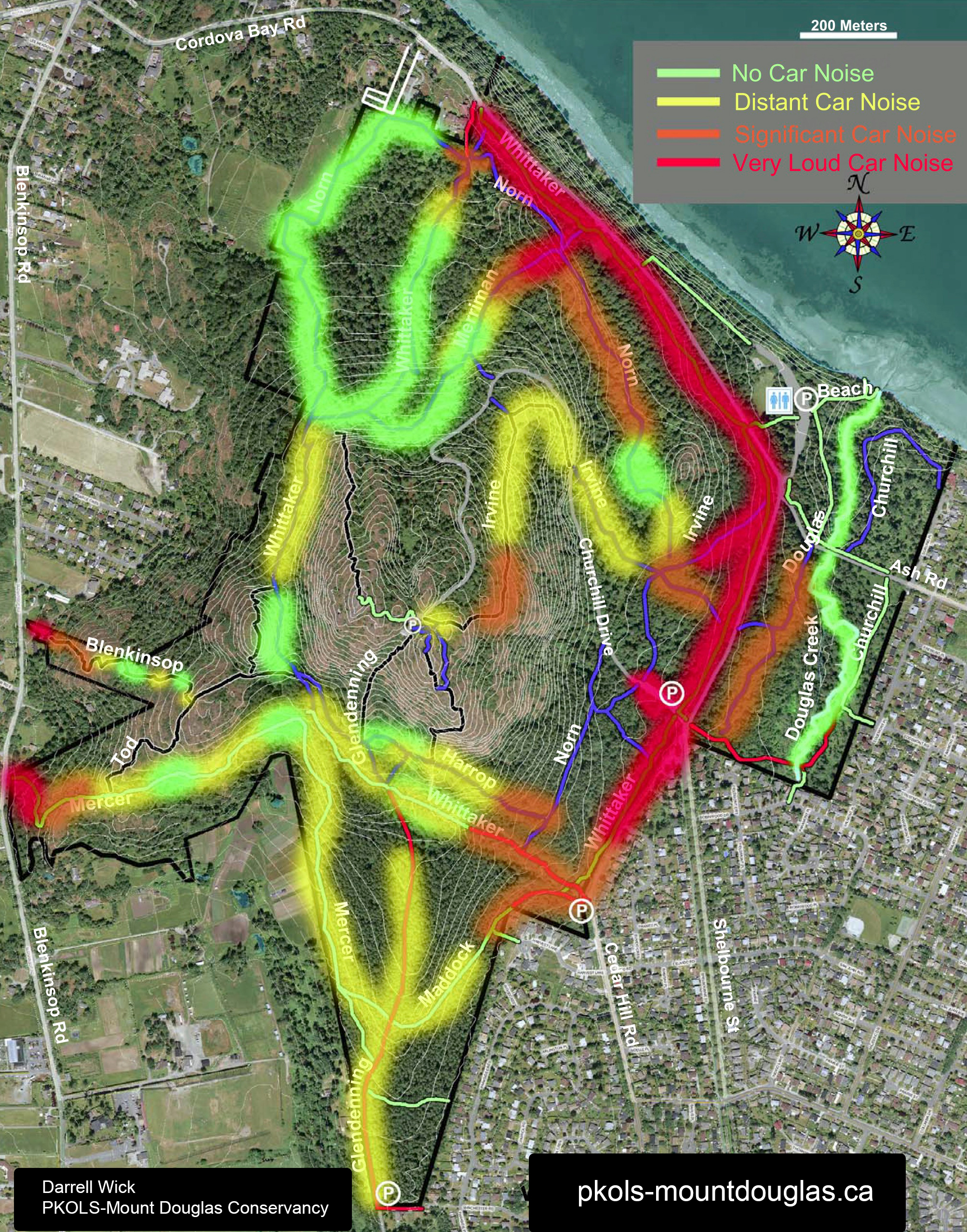
The PKOLS-Mount Douglas Conservancy has appreciated the natural quiet deep within PKOLS-Mount Douglas; these sounds of nature and natural quiet are essential resources to be valued and preserved. There are many natural quiet locations throughout the Preserve, and we have begun a sound mapping project to document this soundscape.
Organizations elsewhere also recognize quiet as a valuable resource; there is an excellent movement in Olympic National Park to preserve “one square inch of silence” where “noise-free intervals” are measured as the time when there are no human-generated sounds, including airplanes (www.onesquareinch.org). The US National Park Service considers natural quiet sufficiently important that they have a Natural Sounds and Night Skies Division, recognizing that visitors come to preserve to hear natural sounds and to escape traffic and city noises; the division monitors tour flights and also takes action on sounds generated outside the parks that adversely affect the natural soundscape. PKOLS-Mount Douglas deserves similar protection (though we have no expectations regarding low-flying noisy aircraft…yet!).
Where is your favourite “natural quiet” area in PKOLS-Mount Douglas?
References
- CBC interview of the quiet soundscapes within the Park
- BBC article about Gordon Hempton, an acoustic ecologist
- VicNews article on park volunteers seeking the sound of silence
- Victoria News article on locating the quiet in PKOLS-Mount Douglas
- US National Parks Service, Natural Sounds and Night Skies Division
- A musician who works to protect the earth’s last remaining quiet places.
Posted in Uncategorized
Leave a comment
Rapid Biodiversity Call for Action Petition
The petition below is being circulated by a group of concerned stewards and volunteers, from “Saanich’s Pulling Together program.” We greatly appreciate all the work that Saanich Parks staff do in supporting restoration work and volunteers in this fantastic and unique program. However, there is a shortfall in public education about the park, climate impacts, increase population and significant increases in park usage. As a result, there has been a rapid loss of biodiversity, rogue trails through sensitive areas, and a rapid increase in invasive species in areas already previously cleared.
We have attached to this email a petition to Council to be signed by interested Saanich Parks volunteers and supporters. You can support our efforts in several ways:
- Read the attached petition to Saanich Council, which outlines our concerns and proposed solutions/suggestions.
- If you agree with and wish to have your name included as a signatory on the petition, please forward your full name, Saanich park connection, resident municipality and postal code by March 5, 2023 to Ted Lea tedloralea@shaw.ca
- We intend to present the petition to the Saanich Council on Monday, March 6 at 7 pm.
- Please forward this message to lead stewards, volunteers and supporters within your own network.
Further Information
Video documentation of extensive park damage by poorly managed dogs
Posted in Uncategorized
Leave a comment
20th Annual Salmon Transplant
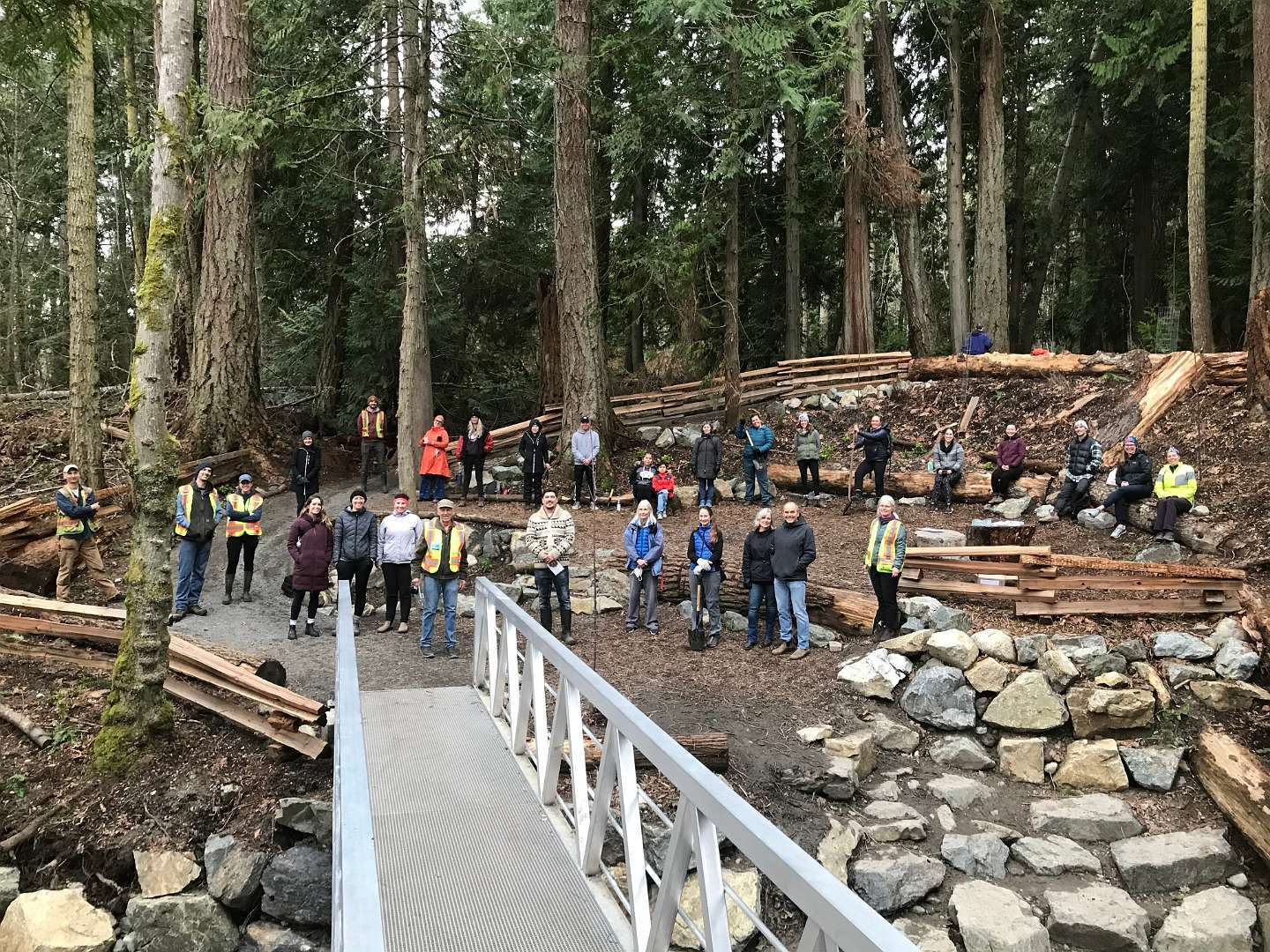
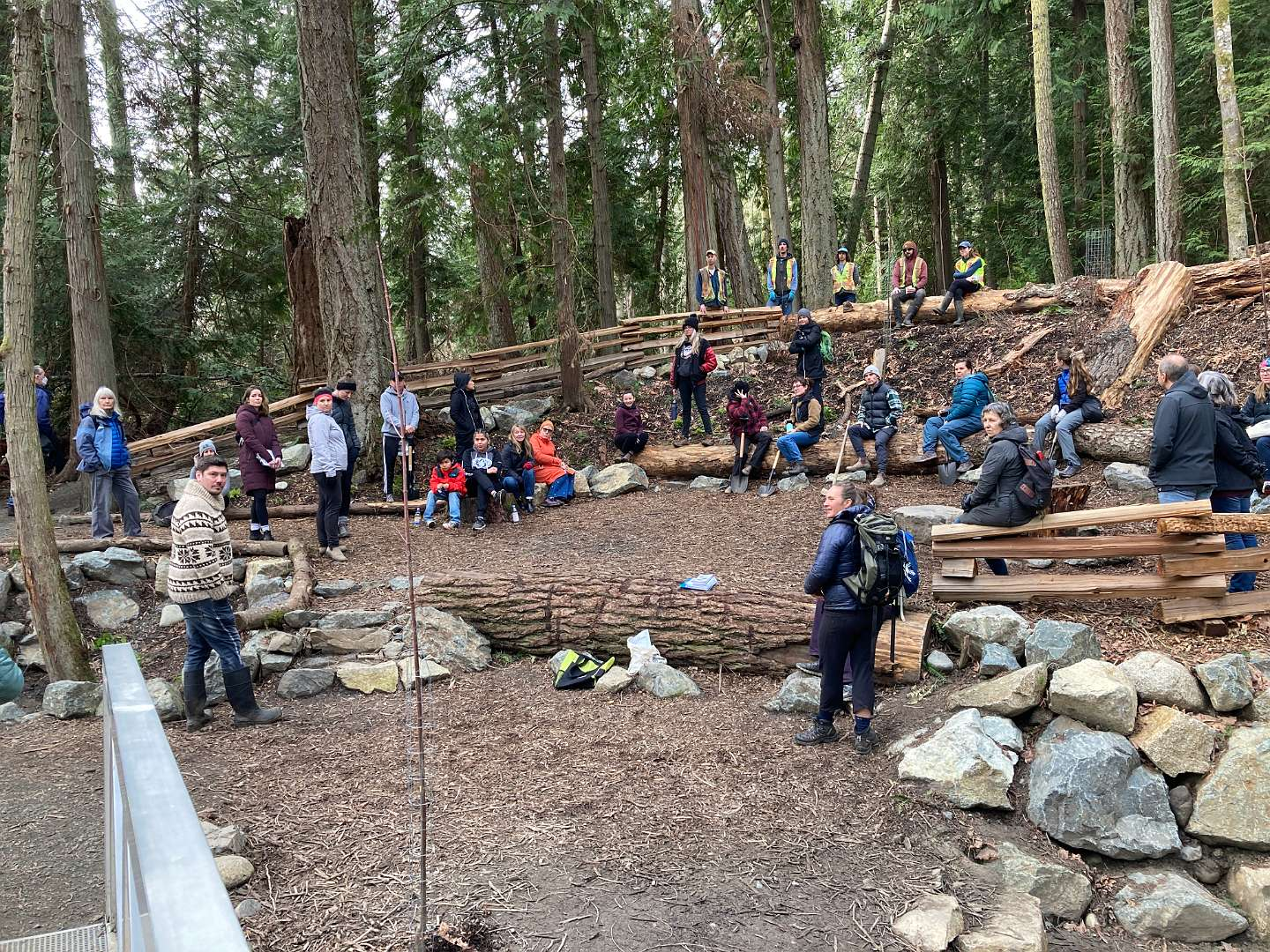
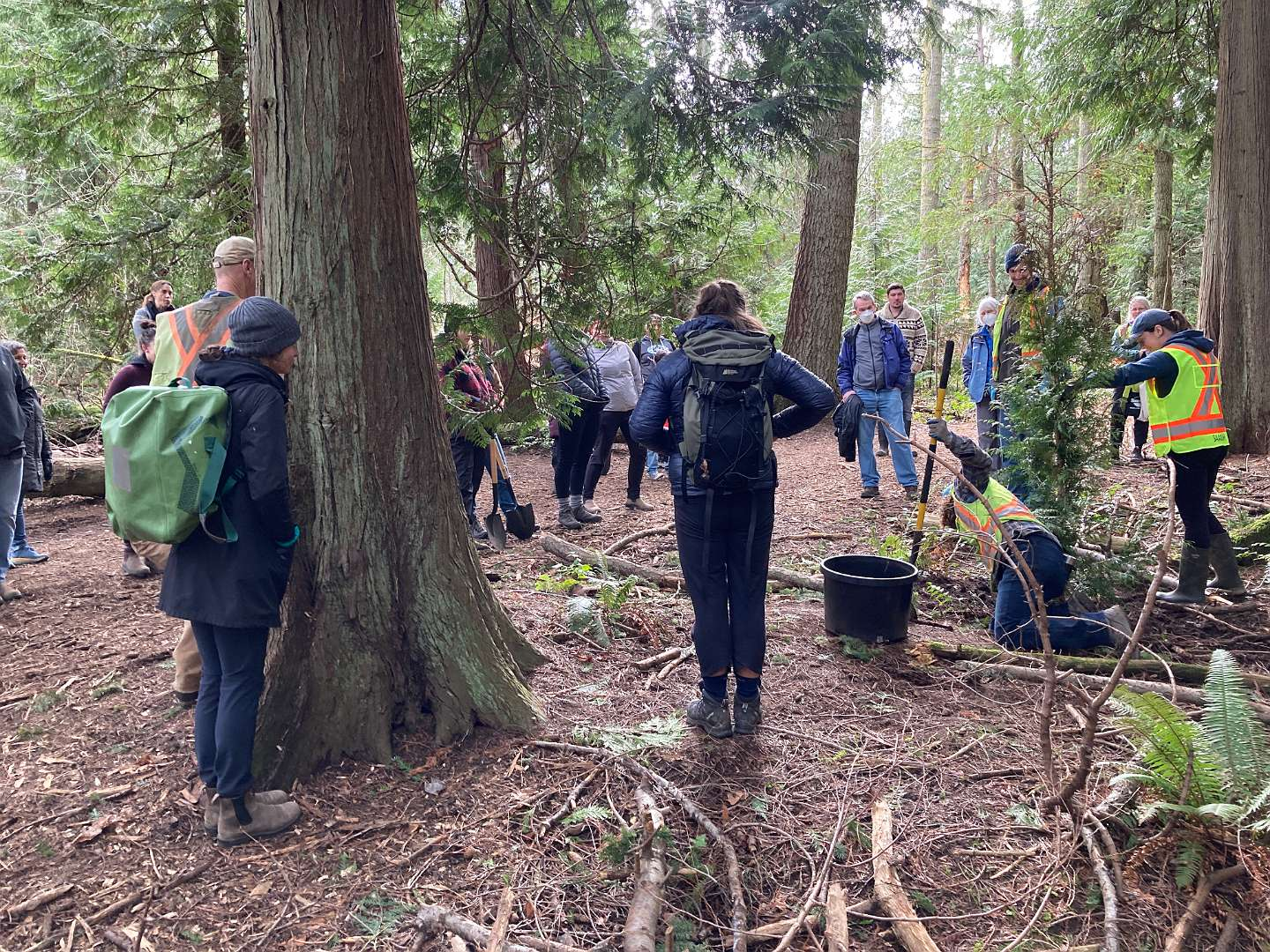
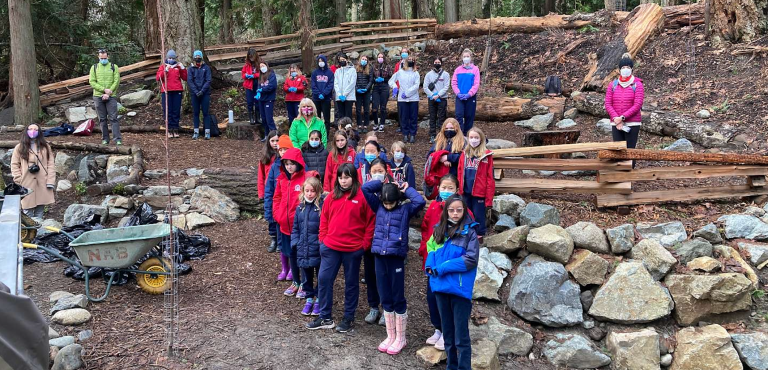
The 20th Annual Salmon Transplant was held at the Outdoor Classroom at Douglas Creek Bridge on January 14th, 2023. Thank you to the Goldstream Fish Hatchery for providing the invaluable salmon carcasses and salmon fry, and to all who attended and made the event a success.


1. Carcasses of chum salmon line the banks of Douglas Creek
2. Salmon fry were released at the upper Douglas Creek weir
3. Members of the community participate in the annual “toss”
4. The new outdoor classroom at the Douglas Creek
Photos by Edward Peck
News Coverage
- Saanich News: VIDEO: Over 100 salmon carcasses tossed in Saanich Creek
- CBC: It’s slimy, slippery work, but tossing dead salmon is great for this B.C. ecosystem
- Global News: Dead salmon transplanted into creek
- CTV News: Conservationists mark 20 years of hauling dead salmon to Vancouver Island creek
- Goldstream News Gazette: ‘Simulating nature’: Saturday event in Saanich putting dead salmon into creek
- Canada Today: Conservationists have been hauling dead salmon down Vancouver Island Creek for 20 years
“Their survival rate to this stage is way less than 1%…You’re actually holding a small miracle when you hold a salmon.”
– Tom Rutherford, Fisheries Biologist
The Circle Of Life
In a healthy ecosystem, salmon will return to their natal creek to spawn and then die shortly after. As the salmon carcasses decompose, their nutrient-rich bodies provide essential nourishment to the next generation of salmon fry. These nutrients are shared by the surrounding flora and fauna, benefiting the ecosystem as a whole.
Why Dead Salmon?
The urbanization of the Douglas Creek watershed over the decades has disrupted the ecological balance and health of the creek. In transplanting salmon carcasses into the creek, this small act of environmental stewardship allows us to simulate the natural lifecycle of this keystone species in the absence of sufficient salmon returns.
History of A Creek
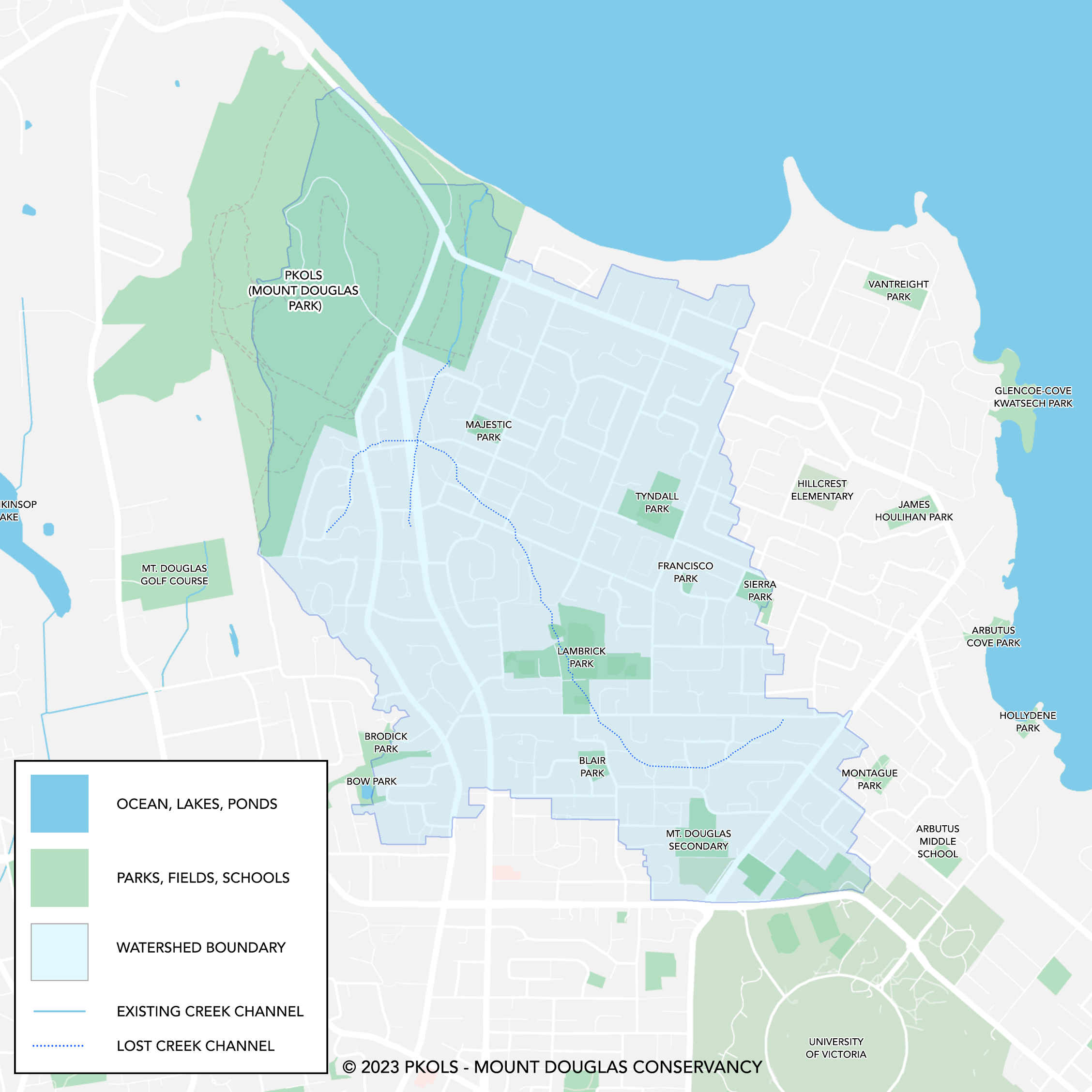
Today, Douglas Creek is in extremely fragile condition. Historically, the watershed was forested with Douglas Fir and Garry Oak meadows, and consisted of about 7 km of open stream channels. Today, only about 800m of the original stream channel remains. The lost creek channels have either been infilled or diverted into an extensive network of stormwater sewers.
Impacts of Urbanization
A combination of increased impervious areas (~37%) within the watershed and reliance on stormwater sewers has significantly increased the amount of stormwater runoff diverted into the creek. The subsequent peak flows and stormwater surges result in creek bed erosion and destruction of critical salmon spawning habitat.

Ecological Stewardship
Although there are still small numbers of salmon returning to Douglas Creek each year (as seen in this video from November 2022) ongoing restoration efforts such as the annual Salmon Transplant are essential in order to give the creek the best chance at recovery.
Community Education
Community involvement and participation provides far more than just an opportunity for people to get their hands dirty (or, in this case, slimy!). The educational benefit of these activities is equally as important as the ecological benefits. Learning about the watersheds in which we live, work, and play and understanding how our everyday actions affect the health of the ecosystems is one way we can begin to make change for the better.
Big Leaf Maples
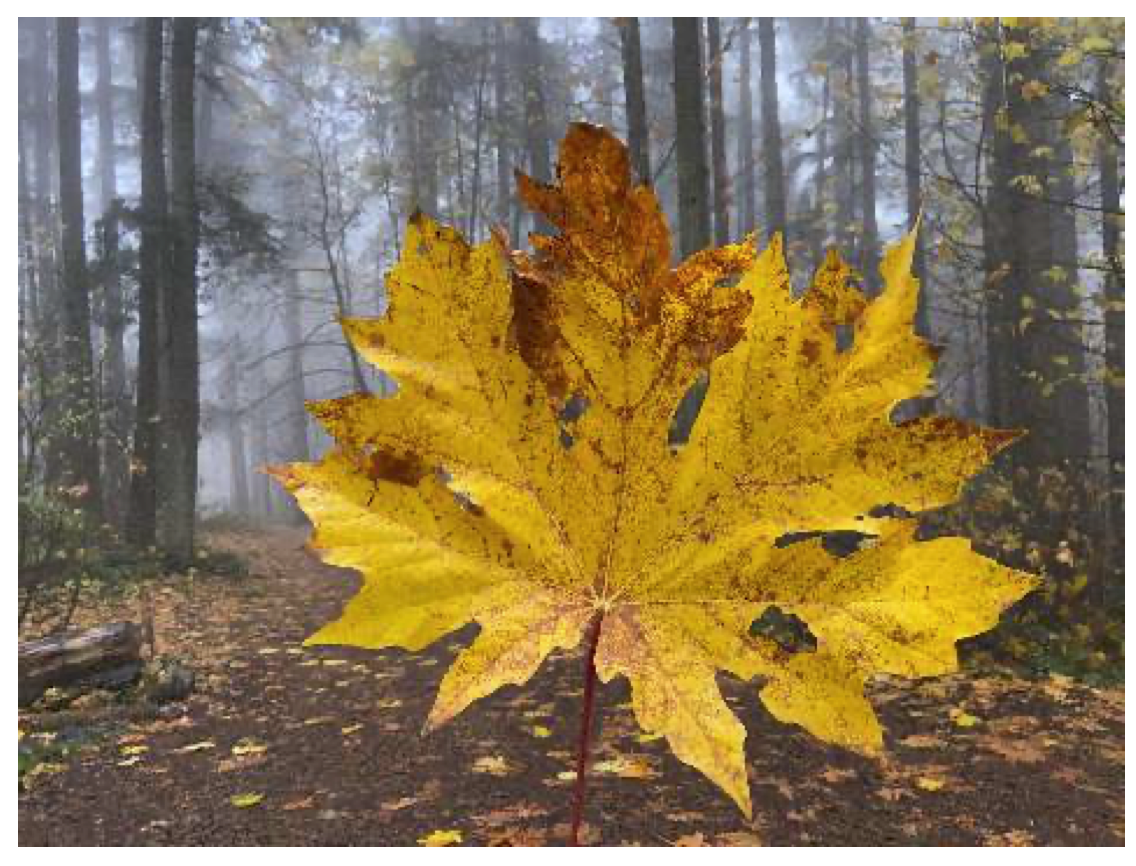
Maple trees are ancient, going back a million years or more. Of 128 species of maples, the bigleaf maple, Acer macrophylum, is the only one native to northwest coastal regions. These multi-trunked giants are the tallest of the maples typically ranging from 12-23 metres tall, some recorded as tall as 48 metres! Bigleaf maples also have the largest leaves of any tree in North America! Some reportedly reaching 60 cm wide, although the average size is about 30 cm. Tree leaves act as solar panels and allow the tree to store energy from the sun. Because bigleaf maples have huge leaves, they can store a lot of energy which will be converted to food through photosynthesis. Maples are very often seen in riparian zones after fires or logging since they have high productivity rates and easily regenerate. They can grow over 3 metres in 1 year. They have evolved with local insects and disease pathogens therefore disease and pest problems tend to be minimal, and survival rate of these trees is typically high. They can live to 300 years or more in the right conditions.
Maples Give Back to Nature.
Maples are important to the ecosystem in which they live. Plants, animals, soil, and even aquatic life benefit from these majestic giants. During growth bigleaf maples require high amounts of nutrients along with water, which they absorb from the soil. Trees have small tubes, called xylem, that extend from its roots and run throughout the tree transporting water and nutrients; this is the sap. The entire tree becomes rich in nutrients, and the bark especially high in calcium. This is ideal for air plants like mosses, liverworts, and licorice ferns. Air plants don’t require soil to grow and thrive on the bigleaf maples nutrient rich bark as substrate.
Moss load on bigleaf maple trees is typically the greatest of all the tree species in the Pacific northwest. In coastal rain forests a bigleaf maple could be supporting up to 1 ton of mosses. These trees are experts at aerial gardening.
In fall, bigleaf maples produce a lot of leaf litter. Their leaves are enormous. High nutrient content in leaves promotes quick decomposition, typically within a year. As leaves break down, nutrients are released back into the soil, improving soil quality. In addition, a deep widespread root system holds soil in place, and prevents it from becoming compact. This allows water to soak into the ground instead of flowing over the surface and washing away loose soil. Widespread leaves and branches act as a wind break and rain control so soil is not blown away or washed out. Thus, bigleaf maples help minimize erosion.
Long leafy branches provide a source of shade and shelter in the summer. As a bigleaf maple grows it drops its lower branches, creating nooks and crannies in the tree that small animals and birds love to nest in. Branches that fall on the ground provide woody debris for other plants to germinate on and give shelter to small creatures. When the branches fall into the creek they enhance the habitat quality for aquatic life. Maplewood decays more rapidly than other wood because of its high nutrient content, providing organic matter that is readily available as food in the water. Branches hanging over the creek also provide a tasty snack for fish when bugs fall into the water.
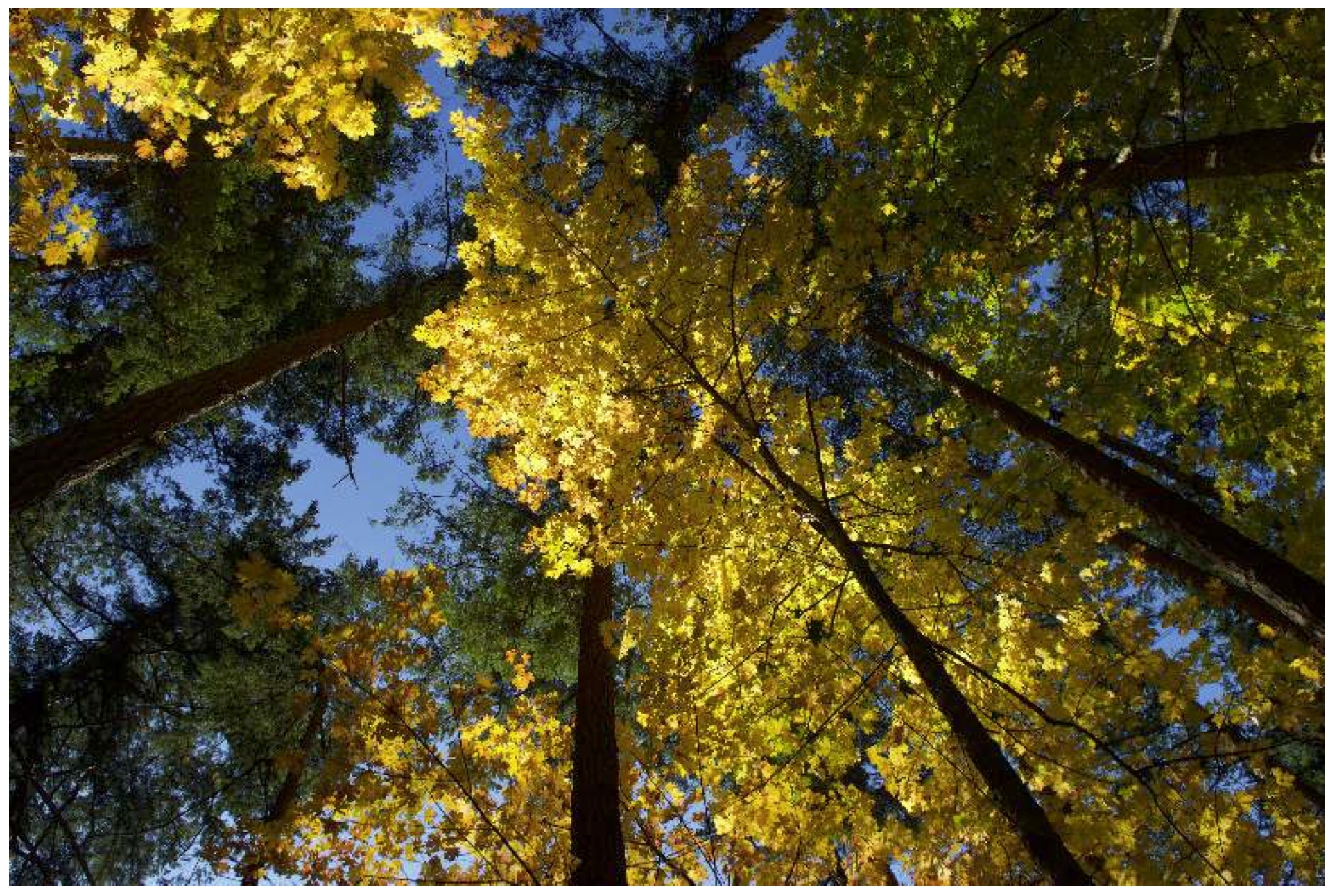
Early in spring, maples are a very important nectar source for bees and insects coming out of hibernation. They have an abundance of flowers which provides a much-needed food source after a long sleep. When their seeds spin to the ground in late spring, they provide food for various critters.
Maples in Danger
Big leaf maples are being impacted by climate change, and instances of die-off have been increasing over the past decade. Rising temperatures and drought conditions are making survival more challenging for bigleaf maples. During extremely dry conditions, bubbles can form in a xylem tube, possibly rendering it unusable forever. If a tree cannot get enough water or nutrients, it will inevitably die.
In some areas, bigleaf maples are reportedly producing smaller leaves with a yellowish scorched appearance, and leaves are falling much sooner than they should. This is especially evident near roads and developed urban areas where temperatures are higher. Without healthy leaves, photosynthesis can’t happen, and a vicious cycle begins. The tree gets stressed and must put energy into simply surviving instead of growing large leaves; however, without these large leaves, the tree is unable to produce enough food, which causes it more stress. A stressed and weakened state makes the tree more vulnerable to pests, disease, and extreme weather, such as wind and ice storms.
Climate extremes are an issue when the weather warms up for a few weeks and triggers the tree to produce new buds, then suddenly drops. New buds could freeze, dry out, and die. This results in the loss of a whole phase of new growth, which took up much of the tree’s energy reserve to produce. If the tree is already in a weakened state, replacing these buds could be a struggle and could result in starvation the following year.
Posted in Uncategorized
Leave a comment
Photo Contest
Contest Details & Rules
The Friends of Mt. Douglas Park Society are sponsoring a photography contest to help increase awareness of the park and its fragile, unique environment. As the Saanich website states: “Many fragile ecosystems exist within the park – from the rock outcrops at the summit to down between the tide lines on the beach. Please treat Mount Douglas Park with respect and preserve these sensitive habitats.” It is hoped that this contest will bring greater awareness of how unique and fragile the park is and how we can ensure the ecology of the park is protected and thrives. It is also hoped that new members will be inspired to join the society increasing the “friends” who are actively helping to preserve and maintain the park.
Contest Rules
- All Photographs must be taken by the person submitting them to the contest.
- The contest is open to new and existing members of the Friends of Mt. Douglas Society or those who made a donation to the society while submitting their images. of $10 or more.
- Individuals may submit up to three images.
- Images will display best at 2048 pixels per inch on the shortest side at 72dpi, this will create a file of approximately 4MB. Please, when you are sending smartphone pictures, ensure that you are sending them full size.
- Email mages to the following address: mountdouglaspark@gmail.com
- Please submit a JPEG file using the following protocol: first name, last name, title and category. This is an example of your JPG file name: DarrellWick_SalmoninStream_RepairanTidal.jpg. (See categories below)
- Images must be submitted on or before midnight October 31, 2022
- Photographs can be submitted under the following categories:
- Use: (Photographs that illustrate the environmentally appropriate use of the Park, such as the use of official trails)
- Flora: (Photographs illustrate the plants and trees found in the park.)
- Scenic: (Photographs that portray the scenic nature of the park)
- Riparian: (Photographs that illustrate the riparian and tidal zones of the park)
- WildLife: (Wildlife photographs of the Park)
- All photographs must be taken from the Park’s designated trails. Please keep in mind that apps such as All Trails show trails that are not official and do extensive damage to the ecology of the park when used.
Keep in mind that Saanich has stated that many fragile ecosystems exist within the park – from the rock outcrops at the summit to down between the tide lines on the beach. Please treat Mount Douglas Park with respect and preserve these sensitive habitats.
Saanich Trail Use Etiquette
In order to protect the park the Saanich has set the following trail etiquette:
- Respect plants, wildlife and private property.
- Keep our parks and trails clean – follow a Pack it in, Pack it out Philosophy. Ideally, all items taken to any park go back home with you. If needed, put litter in the waste containers. Do not dispose of trash or throw animal waste bags to the side of the trails.
- Watch for and respect horseback riders as horses may easily startle.
- Keep dogs under control.
- Please pick up after your pet and deposit bags in waste containers.
- No dogs on the beach or around the playground and lower/beach parking area (“area bounded by Cordova Bay Road, Ash Road, Douglas Creek, the natural boundary of the ocean and the northwesterly boundary of the park, EXCEPT the asphalt road surface lying to the northwest of the picnic area between the two gates” – Animal Bylaw).
- Cycle only on paved roads, not park trails.
- Many fragile ecosystems exist within the park – from the rock outcrops at the summit to down between the tide lines on the beach.
- Please treat Mount Douglas Park with respect and preserve these sensitive habitats.
Jury and Prizes
The jury will select winners on the basis of the following criteria.
- How well the narrative of the image portrays the category.
- How well the composition of the image engages the viewer.
- The quality of the image.
The jury will select a winner and runner-up in each category.
The Jury for this contest are:
- FMDPS Board
- Phyllis Schwartz:
- Edward Peck:
Prizes to be determined
Copyright
All photographs submitted by individuals will retain their copyright; however, it is understood that by submitting images to this contest grants Friends of Mount Douglas Park Society the use of these images for the purposes of the society.
Salmon Life Cycle Poster
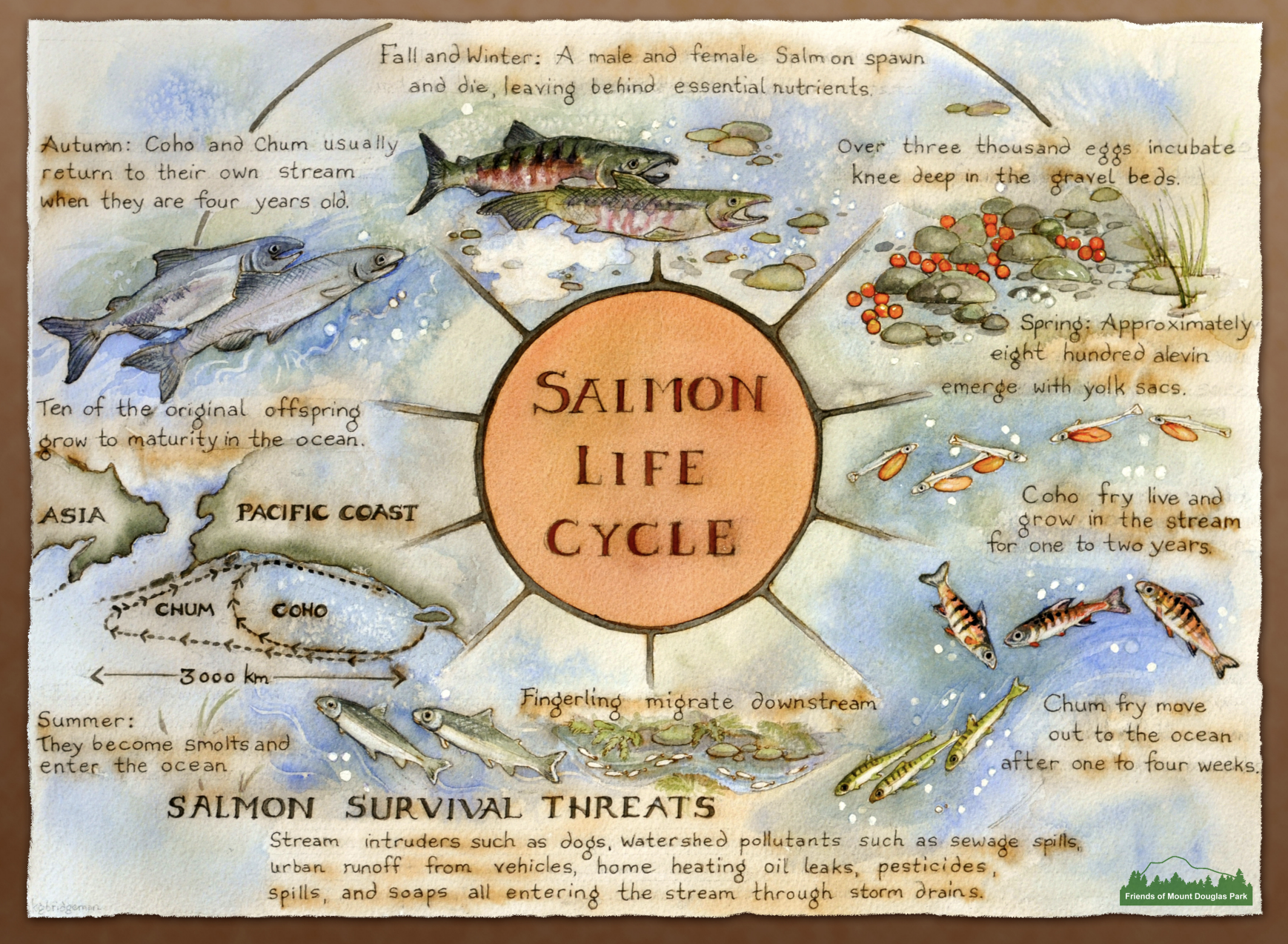
Fall and Winter:
- A male and female Salmon spawn and die, leaving behind essential nutrients
- Over three thousand eggs incubate knee deep in the gravel beds
Spring:
- Approximately eight hundred alevin emerge with yolk sacs
- Coho fry live and grow in the stream for one to two years
- Chum fry move out to the ocean after one to four weeks
- Fingerling migrate downstream
Summer:
- They become smolts and enter the ocean
- Ten of the original offspring grow to maturity in the ocean.
Autumn:
- Coho and Chum usually return to their own stream when they are four years old.
Salmon Survival Threats:
- Stream intruders such as dogs, watershed pollutants such as sewage spills, urban runoff from vehicles, home heating oil leaks, pesticides, spills, and soaps all entering the stream through storm drains.